Friday, July 25, 2014

Math Links for Week Ending July 25th, 2014

I am a sucker for any resources on the nature of randomness. We really have a hard time understanding what random really is. In this interview from Science Friday, they talk to William Poundstone, author of “Rock Breaks Scissors: A Practical Guide to Outguessing and Outwitting Almost Everybody”. In it he talks about how knowing how random truly works can be an advantage that you can exploit. This is a good topic of conversation for any students talking about probability. Listen to the full interview below.
Curriculum Tags: Gr7, Gr8, MBF3C, MDM4U
http://sciencefriday.com/segment/07/11/2014/the-surprisingly-predictable-patterns-of-random-choice.html

There are a lot of people blogging about teaching math these days and someone has been trying to catalogue the efforts. This blog is even on the list that you can find here:
Curriculum Tags: All
http://mathtwitterblogosphere.weebly.com/list-of-tweeps-and-blogs-by-category.html

At first I thought this problem might be a little trivial. But this 3Acts from Dan Meyer is actually nicely done and works well with both addition of fractions or division of fractions as well as proportional reasoning. Get the full task at the link below
Curriculum Tags: Gr7, Gr8
http://www.101qs.com/3043-nanas-lemon-water

This 3Act from When Math Happens is a nice problem that brings expectations from multiple strands in. It includes volume of cylinders and then potentially proportional reasoning and data management (depending on how far you want to take it). Plus it might get you all fired up since someone will have to drink all of those energy drinks. Since I am writing this for Ontario curriculum, keep in mind that the measurements are in inches and ounces so you may want to redo this in metric (or not). Get the full task at the link below
Curriculum Tags: Gr8, MPM1D, MFM1P

In general, I like the idea of problem based learning but sometimes getting good problems is an issue. A good stepping stone to those types questions are what Jo Boaler calls "low floor, high ceiling" questions. That is, easy for students to start but can become more complex and deep as well. She has started to compile a list of these that you can try out on her youcubed.org site. In the coming weeks I will try to highlight some of these individually but for now take a look for yourself.
Curriculum Tags: All
http://youcubed.org/teachers/category/low-floor-high-ceiling/


Friday, July 18, 2014

Math Links for Week Ending July 18th, 2014

This is a neat problem that you could have grade 7 or 8 students work on that fits really nicely into the geometry strand. The premiss is you have 5 points then there is always a way to create a convex quadrilateral and then extends from there.
Curriculum Tags: Gr7, Gr8
https://www.youtube.com/watch?v=xPk3SZiFEvQ

Here is a nice interview with Ed Frenkel on Science Friday where he talks about the importance of learning math. Going as far to say that it is your patriotic duty to learn math. Listen at the link below.
Curriculum Tags: All
http://sciencefriday.com/segment/07/04/2014/do-your-patriotic-duty-learn-math.html


Need some graph paper templates? Look no further than this site which has many to choose from (including calculator screens).
Curriculum Tags: All
http://mathbits.com/MathBits/StudentResources/GraphPaper/GraphPaper.htm
If you have students who are Dr. Who fans then maybe you can use some of this data to deal with data management.
Curriculum Tags: Gr7, Gr8, MBF3C, MDM4U
https://www.youtube.com/watch?v=FLH6GprKhsc

If you are a fan of Archie (yes, the Archie of Archie comics) then you may be sad that (spoiler alert) he will be taking a bullet and dying in the latest issue (it's been a while since I looked an Archie Comic and it looks like things have been getting a bit darker). None the less, according to 538, Archie has been dying for years and here is the data to prove it.
Curriculum Tags: Gr7, Gr8, MBF3C, MDM4U
http://fivethirtyeight.com/datalab/archie-death-comic-sales/


Friday, July 11, 2014

Math Links for Week Ending July 11th, 2014

It's the summer so links seem to be few and far between but I came across this one to bring it in. How about making this drink that gets progressively sweeter as you drink it according to the Fibonacci sequence? Get the recipe and instructions here.
Curriculum Tags: All
http://blog.andreahawksley.com/fibonacci-lemonade/

Pickings are slim on the resources department. I guess since it is summer. But here are a few recent posts from Kyle at Tap Into Teen Minds. I guess he didn't slow down at the end of June. The first three are on the geometric representation of Pythagorean Theorem. Below is a sample of the materials
Curriculum Tags: Gr8, MPM1D, MFM1P
Part 1: http://tapintoteenminds.com/2014/06/28/pythagorean-theorem-part1/
Part 2: http://tapintoteenminds.com/2014/06/29/pythagorean-theorem-part2/
Part 3: http://tapintoteenminds.com/2014/07/02/pythagorean-theorem-part3/


Though not from the Tap Into Teen Minds blog directly, Kyle categorized this one and turned it into a formal Three Act Task. This task uses this awesome clip dealing with some of the more popular hotdog eating champions. Yes, that is what I said, hot dog eating. And it includes the man who changed the face of hot dog eating, Takeru Kobayashi (you may have heard of him if you are a regular Freakonomics Radio listener). So this Three Acts Tasks deals with a commercial featuring some hotdog eating (see below) and can be related directly to linear relations and patterning. Check out the the original post at the link below and Kyle's 3 Act treatment at the link above.
Curriculum Tags: Gr7, Gr8, MPM1D, MFM1P


Friday, July 4, 2014

Math Links for Week Ending July 4th, 2014

I love this new video from George Hart. I had the pleasure of meeting George at OAME this year. He presented three speakers ahead of me when we did our Ignite sessions. In this new video he presents seven slide together constructions made from various polygon shapes. I didn't see a link anywhere for the templates so I made my own from screenshots that you can download here.
Curriculum Tags: All
https://www.youtube.com/watch?v=Yq0La4rEarc

I really like this new Jo Boaler video where she tries to give justification on why common core is necessary. The thing I like about it the most is the emphasis on rich open tasks and why those are important for kids to do. Even more so I love the qualification of the different ways the given quadratic growing pattern can physically grow. I think the volcano is my favourite analogy.
Curriculum Tags: Gr7, Gr8, MPM2D, MFM2P
https://www.youtube.com/watch?v=pOOW0hQgVPQ


If you are doing any work with open questions (see Marian Small for what that is) then this is a nice resource that could give you some insight on how to create them.
Curriculum Tags: All
http://nrich.maths.org/2471

In a recent MaCleans magazine on Canada they had a nice article with a lot of good graphs that could be easily used in any data management class. Check it out
Curriculum Tags: Gr7, Gr8, MBF3C, MDM4U, MAP4C
http://www.macleans.ca/news/canada/putting-canada-on-the-map/

This came across my Facebook feed this week. Jokes are fun but when you can connect them to curriculum then that's even better. For example this one "An infinite number of mathematicians walk into a bar. The first orders a beer, the second orders half a beer, the third orders a quarter of a beer, and so on. … After the seventh order, the bartender pours two beers and says, “You fellas ought to know your limits.”" could be used for Calculus and there is a nice one that could be used when talking about loans in grade 11
Curriculum Tags: MCR3U, MBF3C, MCF3M, MCV4U
http://www.tickld.com/x/20-intelligent-jokes-most-people-wont-get-straight-away-16-is-gold

Imagine that a school built especially for kids who love math
Curriculum Tags: All
http://blogs.kqed.org/mindshift/2014/07/a-school-built-entirely-around-the-love-of-math/

I add this here not because I agree with it but because I do like to show both sides of the story. I do think that drill is needed but the issue here is that you need both a balance of drill and problem solving. But what isn't mentioned is that if you are testing kids on things that you practice by drilling then of course they will do better than kids who were taught more holistically. So I am not sure how valid the study is (despite how much care went into the production of the study)
Curriculum Tags: All
http://www.ajc.com/weblogs/get-schooled/2014/jun/27/want-kids-do-better-math-put-away-group-games-get-/

I think this would be a great challenge. Use your knowledge of quadratic relations to prove this video can't be true. Thanks to Geoffrey Bezaire for this one
Curriculum Tags: MPM2D, MFM2P, MCR3U, MCF3M, MBF3C
https://www.youtube.com/watch?v=YyekCd0g8B8


Another one that came through my Facebook feed. I like this because you could use it in any grade that talks about patterning but especially in grade 10 where you first discover quadratic relations. This is such a simple pattern when you figure it out algebraically and having kids do it manually could be a good catalyst when talking about quadratic relations.
Curriculum Tags: Gr7, Gr8, MFM2P, MPM2D


Friday, June 27, 2014

Math Links for Week Ending June 27th, 2014

Hey, I have started a new blog with my teaching parter. This blog (the one your lookin at right now) will continue to come once a week but my new blog is a place for us to store all the activities we have developed over the last couple of years. We went a bit crazy this week and created 4 posts. Each one has a brief description of the activity, curriculum links, procedure, sample work (where possible) and the file downloads.
The first few posts have topics like converting from one form to the others (equation, tabular, graphical and story) with linear equations, using fractions to create a group structure, simplifying polynomials with algebra tiles and playing the game "Heads Up" to consolidate properties of quadrilaterals. All with full downloads. Hopefully over the summer we will continue to add our activities. Take a look
Curriculum Tags: Gr7, Gr8, MPM1D, MFM1P
http://engaging-math.blogspot.ca/2014/06/linear-scavenger-hunt.html
http://engaging-math.blogspot.ca/2014/06/algebra-tile-musical-desks.html
http://engaging-math.blogspot.ca/2014/06/quadrilateral-heads-up.html
http://engaging-math.blogspot.ca/2014/06/sort-students-into-groups-using.html


I think this would be a great problem dealing with rates. That is, if you know how much energy it takes to hit a key on a keyboard (1.5 mJ/keystroke) then how about if you type an essay, or write a book. At What if they asked that question and determined what kind of energy output typing out a whole book would be (and more). But don't let them do the work, have your kids do the same work on their own.
Curriculum Tags: Gr7, Gr8, MFM1P
http://what-if.xkcd.com/102/


I like when it is possible to take the abstract and make it visible. So it is with this recent post from Timon Piccini. We have all certainly talked about the "balance method" for solving equations and maybe even played with some virtual balance apps (here, here and here). But in this case the method is to use actual scales. He does talk about some of the difficulties and limitations (and is looking for input on how to fix them) but gives all the handouts, video files and power points. Take a look at the video below which asks how many pennies does x equal if you get some evidence when you split x up evenly in to four different cups (I think the stack of pennies is 10)
Curriculum Tags: Gr7, Gr8, MPM1D, MFM1P, MFM2P
http://mrpiccmath.weebly.com/blog/what-the-x-how-i-teach-basic-linear-equations


Though not truly an article, I felt this post belonged int his section. Its a few years old but I just came across it. It about the idea that basically school is boring. And before you blame the Internet, think back to when you were in school, it was probably just as boring. The thing is that we now have the technology and the means to actually have school not be boring. So why not take advantage of those opportunities. I love the quotes from the students. Some might give you pause.
Curriculum Tags: All
http://grantwiggins.wordpress.com/2011/07/26/bor-ing/

Did you know that there is a mathematical way to choose a port-a-john. Of course there is and Numberphile is gonna tell us how. The thing I like about this is it really exemplifies the idea of trying a simpler version of a problem to develop an answer for the more complex problem. Some goodcombinatorics in this one.
Curriculum Tags: MDM4U


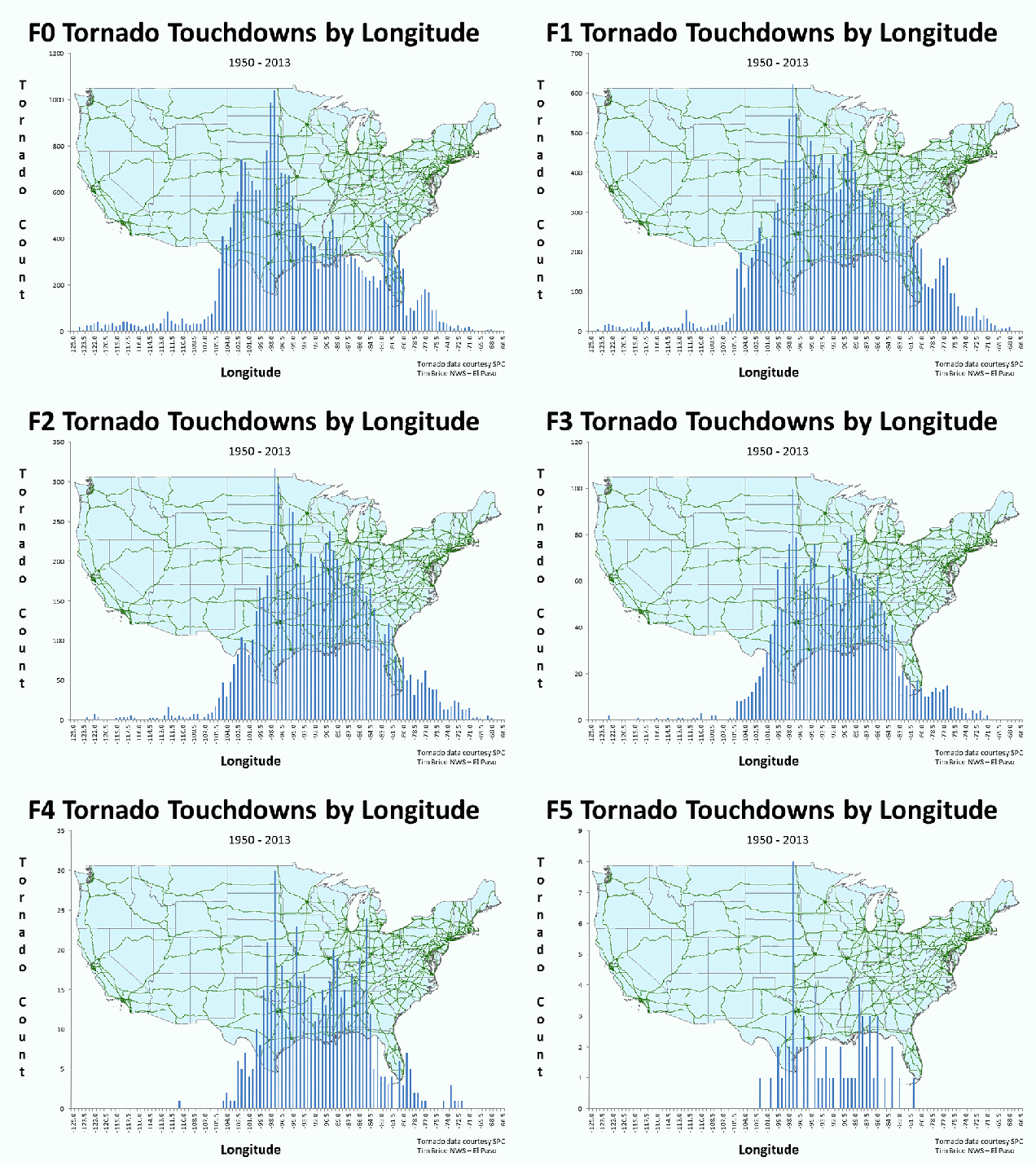
One of the new features of Google+ is that when you upload your photos you can do something called "AutoAwesome" them. That is, you can apply various effects that will enhance your image(s). One of the choices will compile similar images into one animated image. So this meteorologist, Tom Brice, made a bunch of graphs about the frequency of tornadoes agains their location then AutoAwesomed them to get images like the one below. Click here for his original Google+ page. Either way, its some cool data.
Curriculum Tags: MBF3C, MDM4U
http://io9.com/the-location-of-every-tornado-touchdown-in-america-gra-1591958574


Friday, June 20, 2014

Math Links for Week Ending June 20th, 2014

"Part of the joy of the Booster Maxxx is knowing that every few weeks, a bunch of underpaid Eastern-European carnies take it apart and put it back together again in another city, significantly increasing the chances of a catastrophic accident."
And so starts a series of calculations to figure out where you would land if this amusement park ride failed and launched you instead. Although a bit morbid, this series of calculations would be well suited for any class talking about parabolic/projectile motion. I like the use of Google Maps and streetview to enhance the solution.
Curriculum Tags: MPM2D, MFM2P, MCR3U, MCF3M, MBF3C
http://motherboard.vice.com/read/how-far-are-you-flung-when-an-amusement-park-ride-goes-terribly-wrong


I really like this post about using an area model for dealing with quadratic equations. I have been an advocate for that for years but I had never seen this kind of treatment. Using the snap cubes to represent each term for various values of x is neat. And I love the different visual representations of each stage. Check it out.
Curriculum Tags: MPM2D, MFM2P
http://slamdunkmath.blogspot.ca/2014/06/area-length-width.html


This dynamic sketch from the folks at Sketchpad is an interesting way to attack the problem of dynamic software. That is, if you have a dynamic sketch that shows the sum of the angles in a triangle always equal 180o then what might happen is that the dynamic nature may be too quick for students to grasp the very thing you want them to. So they have modified the sketch with virtual protractors so that kids actually have to make the measurements of the angles.
Curriculum Tags: Gr8, MFM1P, MPM1D
http://blog.keycurriculum.com/questioning-some-dynamic-geometry-angle-wisdom/

Here is another connections to math in the movies. This one is dealing with the idea of error calculations and the movie Divergent.
Curriculum Tags: MDM4U
http://www.statslife.org.uk/significance/1345-the-search-for-divergents-and-measurement-error


I wasn't sure about this one at first but then I realized that we do have to try to reach every student and for those who are artistically inclined, this can be a way to get them engaged in the math you are doing. thanks to Peter Wright for this one
Curriculum Tags: All
http://www.teacher-support-force.com/teaching-math-with-art.html


This article focuses on a book called How not to be Wrong: The Power of Mathematical Thinking. I like the reference to the Stock Broker's fallacy problem too. Thanks to Michele Cooper for this one.
Curriculum Tags: All
http://www.theglobeandmail.com/life/parenting/if-you-ever-wondered-how-math-class-could-help-you-later-in-life-heres-your-answer/article19221765/

Although, technically, I think the methods this kid uses are outside of our grade 12 calculus course, it is still interesting. From a scientific perspective, I liked how meticulous he was in taking his measurements.
Curriculum Tags: MCV4U
https://student.societyforscience.org/blog/eureka-lab/teen-puts-calculus-ice


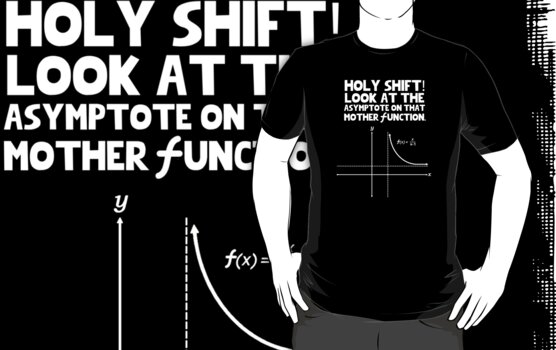
I have seen a few different versions of this shirt but I think this one is the one that is most mathematically correct. Thanks to Michele Cooper for this one.
Curriculum Tags: MCR3U, MHF4U
http://www.redbubble.com/people/malcolmwest/works/12091162-holy-shift-look-at-the-asymptote-on-that-mother-function?p=t-shirt

At 538 they literally post tonnes of stuff every day. So you are bound to find something you will like relating to data. This week it is data about PBS Artist Bob Ross. You may know him as the guy who teaches you how to paint landscapes. Well they have the data on all the elements that he has included in his paintings and here they are
Curriculum Tags: Gr7, Gr8, MBF3C, MDM4U
http://fivethirtyeight.com/features/a-statistical-analysis-of-the-work-of-bob-ross/


Friday, June 13, 2014

Math Links for Week Ending June 13th, 2014

Speed dating and Row games are two really nice activities to promote kids doing questions and then self checking whether they are correct or not. I first learned about these from @k8nowak on her Function of Time blog a few years ago. I was recently reminded of them when @thescamdog tweeted that they have a little video introduction to these on their provincial math site in Alberta. Speed dating has students become experts in the solution for one question each. They are then paired sitting across from each other and switch question. Once that question is solved then they shift one position and switch with another student. Row games has students paired with a worksheet where there are two columns of questions and each student does the question in one column. The beauty of the worksheet is that the answer for each question in any particular row is the same so that if the students get different answers they know that one or both of them has made a mistake. Thus it's self checking.
Curriculum Tags: All
http://www.aac.ab.ca/projects-grants/high-school-mathematics/#FormativeAssessmentRowGamesandSpeedDatingvideo-6

How about some data on the lyrics that boy bands of the 90's used the most. Yep, there's data on that. Hey, data is data. This could easily be used for central tendancy, bar graphs, or even box plots.
Curriculum Tags: Gr7, Gr8, MBF3C, MDM4U
http://fivethirtyeight.com/datalab/90s-boy-band-lyrics-theyre-all-about-you/


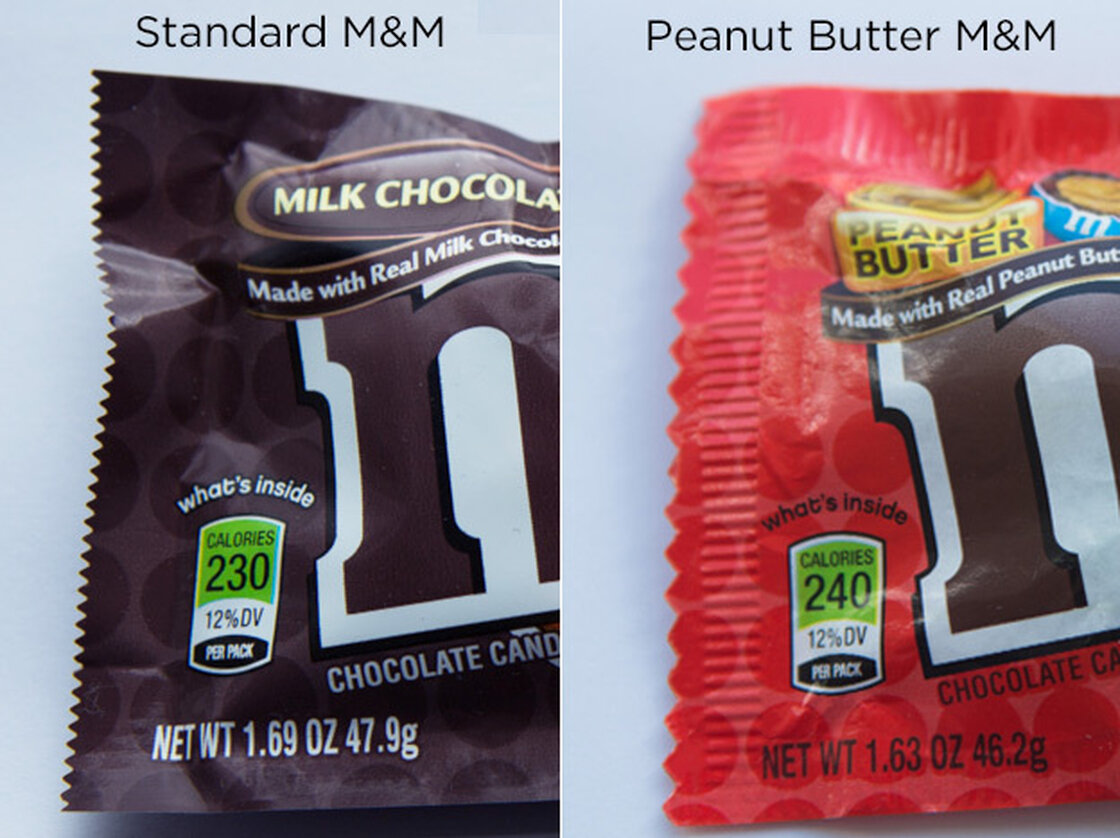
I like collecting real data in classes, and so I was thrilled with a reason to do so. That is, the mystery of why there are different weights of regular M&Ms vs Peanut Butter M&Ms per bag. The actual reason is a bit of a mystery and you can listen about that mystery with the Planet Money podcast here . But collecting data about how many M&Ms are in each pack (or how much each pack weighs in reality) is a good way to talk about measures of central tendency, dot plots, and standard deviation.
Curriculum Tags: Gr7, Gr8, MBF3C, MDM4U
http://www.npr.org/blogs/money/2014/06/05/319084976/why-a-pack-of-peanut-butter-m-ms-weighs-a-tiny-bit-less-than-a-regular-pack

Though this is a couple of years old, I just came across it today. Math Goes to the Movies is a book that connects scenes in movies to teaching specific math concepts. Having done presentations on this sort of thing at OAME, I am interested to see what they have found that I haven't
Curriculum Tags:All
https://jhupbooks.press.jhu.edu/content/math-goes-movies

Math anxiety is real. We have all seen kids who suffer from it. Here are some ways to combat this problem.
Curriculum Tags: All

Mixing dance and math to entice girls in an after school program.
Curriculum Tags: All
http://www.bostonglobe.com/news/science/2014/04/18/after-school-program-uses-dance-nurture-girls-interest-math/JmszMn1zOR7DPcRiozShpN/story.html

One of Keith Devlin's more recent books was Leonardo & Steve about, you guessed it, Fibonacci and Jobs. It comes in ebook only form but if you want to get the gyst of what's in the book you might look at this two part talk on the same subject.
Curriculum Tags: All
http://vimeo.com/93390473
http://vimeo.com/93532834


I like this math "takedown" of this motivational poster. It leads to a nice problem about comparing the volume of cylinders, spheres and cubes. Could be used in grade 9 math measurement or in grade 8 if you leave out the sphere.
Curriculum Tags: MPM1D, MFM1P, Gr8
https://twitter.com/dandersod/status/477024981042626560

Might as well have a graph about the World Cup. This is coming from the 538 blog where they predict the winner of the soccer tournament. And as they point out, you don't need a computer model to predict that Brazil is the heavy favourite (even after their controversial win over Croatia). Either way they go through the reasoning behind their prediciton
Curriculum Tags: Gr7, Gr8, MBF3C, MDM4U
http://fivethirtyeight.com/features/its-brazils-world-cup-to-lose/

538 keeps hitting with the data that has so much bearing on world events. Which is the blingiest NBA playoff matchup? That is which pair of teams has the most rings.
Curriculum Tags: Gr7, Gr8, MBF3C, MDM4U
http://fivethirtyeight.com/datalab/its-the-second-blingiest-finals-matchup-in-modern-nba-history/