Though it may not be obvious at first, I think this new Numberphile video would be a perfect thing to show as an application of zeros of functions. Watch this video about how to use math to steady a wobbly table and see if you don't agree.
Some nice unit conversion resources (specifically metric - imperial) here from Mr. Stadel. Includes a 3Act task dealing with speed conversions. Good for ratios too. Check it out below.
Curriculum Tags: Gr7, MFM1P, MFM2P http://mr-stadel.blogspot.ca/2014/07/san-diego-conversions.html
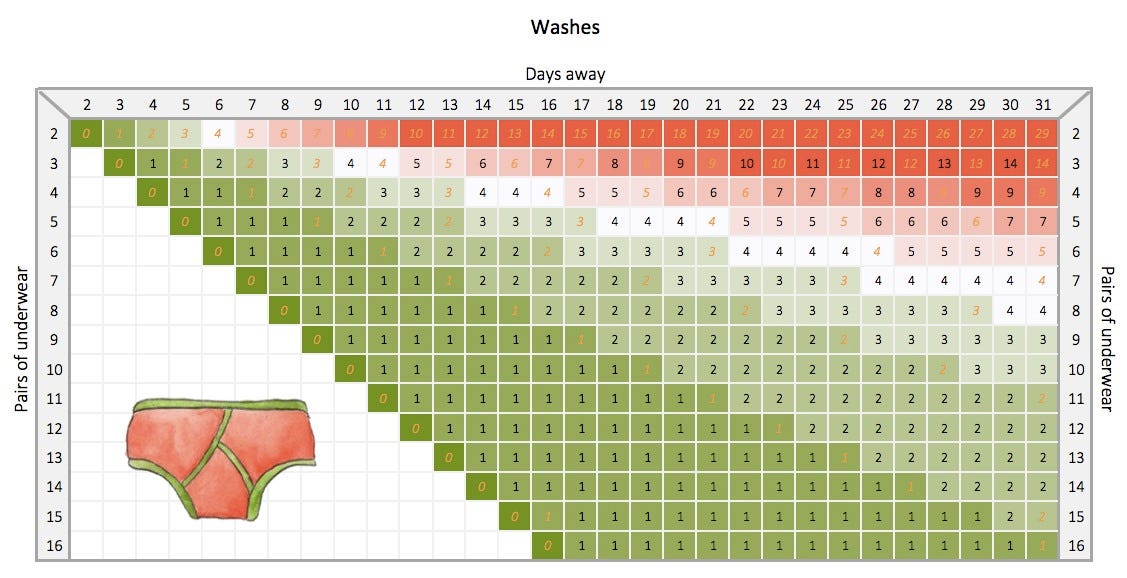
Even the NY Subway collects data. This time on what kinds of things have been left behind on the trains. Not surprisingly, cell phones are #1. But click on the link below and see the graph of the weird stuff too. None the less, some more graphs to include in any data management unit
Curriculum Tags: Gr7, Gr8, MBF3C, MDM4U http://fivethirtyeight.com/datalab/mta-new-york-lost-and-found-subway-most-common/
I am a sucker for re tooling popular games for the math classroom @samjshah at the Continuous Everywhere blog has done just that with the game Headbanz by adapting it for Rational Functions. The game is simple. A player has a graph that they cannot see stuck to their foreheads. They then can ask other players questions about the graph. After asking questions they then have to guess the equation of the graph. With the graphs and equations here you could probably play the game with Grade 11 University students but it is probably more suited for Grade 12 Advanced functions students. Download the cards at the link below and have fun.
Curriculum Tags: MCR3U, MHF4U http://samjshah.com/2014/07/29/rational-function-headbandz/
If you are looking for a kinaesthetic activity to do with your kids that links to circumference of a circle, take a look at this one from @mr_stadel where he talks about making a circle with people. Perfect for getting those grade 8 kids up when doing the measurement unit.
Curriculum Tags: Gr8 http://mr-stadel.blogspot.ca/2014/08/people-circles.html
Wow Dan Meyer is really going all out with this new animated 3Acts. Perfect for talking about optimizing surface area, volume or perimeter. Check out his post below about how to use this "dandy"
Curriculum Tags: Gr7, Gr8, MPM1D, MFM1P http://blog.mrmeyer.com/2014/purposeful-practice-dandy-candies/
I got a birthday card like this the other day.
Curriculum Tags: Gr7, Gr8
Something light because it's the summer. George Hart from a couple of years ago. Have fun linking your bagels. If you really want to link it to curriculum you could probably connect it to grade 8 or grade 9 with area of circles and then do some sort of investigation on how to measure the area after the cut.
Curriculum Tags: Gr8, MPM1D, MFM1P https://www.youtube.com/watch?v=dN8AwGUaqDA
This new video from Numberphile is about primes. That is not a new topic for them. The thing I like about this one is that it shows a neat algorithm that only works for primes. It requires the use of factorials which, technically, is not part of the elementary curriculum but it would be easy enough to introduce and would be a nice little exercise in computation.
Curriculum Tags: Gr7, Gr8, MDM4U https://www.youtube.com/watch?v=eZUa5k_VIZg
And finally another video from Numberphile. This one is from a couple of months ago and I somehow missed it. It's on the fun topic of the Monty Hall Problem. As far as I am concerned, you can't have too many reminders of this one. It's a really fun problem to do in your classes when talking about probability and especially tree diagrams (and in MDM4U conditional probability).
Curriculum Tags: Gr7, Gr8, MBF3C, MDM4U https://www.youtube.com/watch?v=4Lb-6rxZxx0
And there is more on the Monty Hall problem from Numberphile here with this playlist
Well this is the third year in a row that I missed Twitter Math Camp. If you don't know what it is then click here. But by all accounts it was awesome. You can see the Tweets with the hashtag #tmc14 here. Unfortunately for me it is even further away next year as it is in California.
Curriculum Tags: All http://www.twittermathcamp.com/
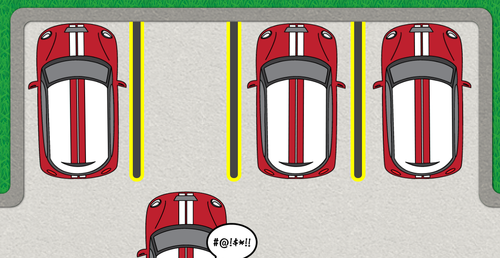
And speaking of TMC, @MaryBourassa gave me this great suggestion. Desmos has a new activity and as the kids say "it's Sick". The premiss is simple. you are creating parking spaces by painting lines. You have a given number of spots to create in a given amount of space keeping in mind that the actual line dividers for the spaces take up space as well. It may sound kinda lame but it is really well structured. It starts with estimation then moves to something more exact and then finally moves to generating an expression to represent the solution in the general case. It's all done in very dynamic nature that starts very visual and simple and works towards algebraic and more complex. The other part that I like is at the end of each section they ask a question and expect a written response. This is done in a neat way where they show some recent responses (not necessarily all correct) so the student has somewhere to start.
This would be a great way to show students the power of equations, variables and modelling in a way that takes them from real to abstract. This is part of a series of activities that Desmos has developed here where you can create a class online to do them with your own students. Anyway, give this parking activity a shot at the following link (click on the Walk through Central Park link)
Curriculum Tags: Gr7, Gr8, MFM1P, MPM1D https://teacher.desmos.com/centralpark#
Asking students questions that will invoke thinking is sometimes tough. So it's always good when someone else does the heavy lifting for you. Here is a blog post that has all kinds of questions on topics like series, sequence, probability, statistics, functions, quadratics, polynomials, rationals, exponentials, logs and modelling. There is probably something here for just about ever math course. I think this also came out of the TMC14. Take a look
Curriculum Tags: Gr7, Gr8, MPM1D, MFM1P, MPM2D, MFM2P, MCR3U, MCF3M, MBF3C, MAP4C, MDM4U, MCT4C, MHF4U http://function-of-time.blogspot.ca/2014/07/essential-questions-for-algebra-2.html
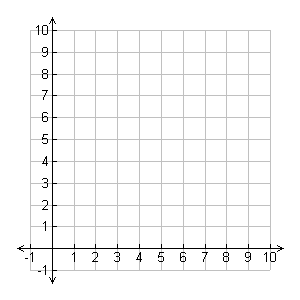
I have seen versions of this in various places but it is worth mentioning it when ever it shows up. Graphing using humans on a grid you put on the floor is a nice kinaesthetic activity. Here is an outline of how to do it.
Curriculum Tags: Gr7, Gr8, MPM1D, MFM1P http://wncpactivemath.wordpress.com/2013/06/20/human-coordinate-geometry/
I first heard about row games a few years ago from the F(t) blog. I have some that I have helped produce that I will be posting soon but here are some more that have already been created. I like these for two reasons. One, students work in pairs to complete a series of problems and two, they don't work on the same problems but instead work on their own column of problems but the answers for each question in each row match so that students can self check if they have the answer correct. That is, if they get the same answer as their partner in the same row then that means they both must have got it right. If they aren't the same answer then that means that one or both of them is wrong and they both have to work to see why.
Curriculum Tags: Gr7, Gr8, MPM1D, MFM1P, MPM2D, MFM2P https://app.box.com/rowgames/1/35624412/1292989622/1
Here is a great video from Numberphile on log tables. I like it because it gives a nice little primer on how calculations used to be done using the log tables. This would be good when teaching logarithms as it gives a nice application (though out dated) of the power of logs.
Curriculum Tags: MHF4U https://www.youtube.com/watch?v=VRzH4xB0GdM
I have said more than once that I love stuff about randomness. And if you ever teach anything about probability then you should too. Here are a couple of related videos, the first from Vsauce talks about what random is.
Curriculum Tags: Gr7, Gr8, MBF3C, MDM4U https://www.youtube.com/watch?v=9rIy0xY99a0
The second video is from Varitasium and is about what is not random. Some things here you might find surprising.
Curriculum Tags: Gr7, Gr8, MBF3C, MDM4U https://www.youtube.com/watch?v=sMb00lz-IfE
At first I thought this problem might be a little trivial. But this 3Acts from Dan Meyer is actually nicely done and works well with both addition of fractions or division of fractions as well as proportional reasoning. Get the full task at the link below
Curriculum Tags: Gr7, Gr8 http://www.101qs.com/3043-nanas-lemon-water
This 3Act from When Math Happens is a nice problem that brings expectations from multiple strands in. It includes volume of cylinders and then potentially proportional reasoning and data management (depending on how far you want to take it). Plus it might get you all fired up since someone will have to drink all of those energy drinks. Since I am writing this for Ontario curriculum, keep in mind that the measurements are in inches and ounces so you may want to redo this in metric (or not). Get the full task at the link below
In general, I like the idea of problem based learning but sometimes getting good problems is an issue. A good stepping stone to those types questions are what Jo Boaler calls "low floor, high ceiling" questions. That is, easy for students to start but can become more complex and deep as well. She has started to compile a list of these that you can try out on her youcubed.org site. In the coming weeks I will try to highlight some of these individually but for now take a look for yourself.
Curriculum Tags: All http://youcubed.org/teachers/category/low-floor-high-ceiling/
This is a neat problem that you could have grade 7 or 8 students work on that fits really nicely into the geometry strand. The premiss is you have 5 points then there is always a way to create a convex quadrilateral and then extends from there.
Curriculum Tags: Gr7, Gr8 https://www.youtube.com/watch?v=xPk3SZiFEvQ
If you have students who are Dr. Who fans then maybe you can use some of this data to deal with data management.
Curriculum Tags: Gr7, Gr8, MBF3C, MDM4U https://www.youtube.com/watch?v=FLH6GprKhsc
If you are a fan of Archie (yes, the Archie of Archie comics) then you may be sad that (spoiler alert) he will be taking a bullet and dying in the latest issue (it's been a while since I looked an Archie Comic and it looks like things have been getting a bit darker). None the less, according to 538, Archie has been dying for years and here is the data to prove it.
Curriculum Tags: Gr7, Gr8, MBF3C, MDM4U http://fivethirtyeight.com/datalab/archie-death-comic-sales/
It's the summer so links seem to be few and far between but I came across this one to bring it in. How about making this drink that gets progressively sweeter as you drink it according to the Fibonacci sequence? Get the recipe and instructions here.
Curriculum Tags: All http://blog.andreahawksley.com/fibonacci-lemonade/
Though not from the Tap Into Teen Minds blog directly, Kyle categorized this one and turned it into a formal Three Act Task. This task uses this awesome clip dealing with some of the more popular hotdog eating champions. Yes, that is what I said, hot dog eating. And it includes the man who changed the face of hot dog eating, Takeru Kobayashi (you may have heard of him if you are a regular Freakonomics Radio listener). So this Three Acts Tasks deals with a commercial featuring some hotdog eating (see below) and can be related directly to linear relations and patterning. Check out the the original post at the link below and Kyle's 3 Act treatment at the link above.


 At the Making Math Meaningful blog last semester @marybourassa took us through every day of her grade 10 applied course. She and her colleague @alexoverwijk developed a curriculum plan that intertwined (or spiralled as they say) all of the curriculum. They presented it at Twitter Math Camp, you can look at their Powerpt here. But check out the blog post below for a more detailed explanation and if you are teaching grade 10 applied then you might want to consider it.