Friday, October 24, 2014

Math Links for Week Ending Oct 24th, 2014

When I saw this I thought it was great. We have done such a good job of mechanizing the solution process for students that they no longer try to make sense of the actual problems we give. In this video 32 students are asked the question "There are 125 sheep and 5 dogs in a flock. How old is the shepherd?" Only a quarter of the students asked actually understood that this was unsolvable in its current form. The rest gave a numerical answer. It was originally discussed in a paper in 1993. This video is from Robert Kaplinsky but the blog post below expands on it further. The issue is that most students (about 75%) will try to do some math with this non sensical question. That is, most do not make sense of the question, they just assume they have to do some math and just try to hammer it out regardless of how realistic it is. I think everyone should try this experiment in their classes and see what your students do. If you get similar results then I think that only confirms what I suspect. That we do a good job of creating robot math students who really don't think about what they are doing.
Curriculum Tags: All
http://tjzager.wordpress.com/2014/10/18/making-sense/


This kind of took the Internet by storm this week. Just released, Photomath boasts the ability to look a mathematical expression, recognize what it is saying and then simplify and solve it. If it works then this will drastically change how we assign homework. The problem is that it doesn't work all the time. Sometimes it doesn't recognize symbols other times it actually gets the math wrong. Watch the video below to see what it is supposed to do. It looks pretty impressive. Well I tried to test this thing out with the expressions seen on the right. For the most part it did alright, it calculated the answer then show the steps (though not always the most efficient steps). However, for the last question, it interpreted the question correctly then started solving it correctly but then the wheels quickly fell off when it dropped a bracket and interpreted a 2 in front of the missing bracket as the whole number 2 (as in a mixed fraction) instead of multiplying by 2. Thus getting the wrong answer. You can see Dan Meyer's post on this with a good discussion in the comments including my comment (#15) with images of this error here and here. Dan later tweeted my example of a mistake out and that conversation can be found here. And that tweet was used by the NY Daily News when they interviewed him about it here.
Curriculum Tags: All


We continue to add to our Engaging Math blog (in fact we just presented it at the When Faith Meets Pedagogy conference today) and I'll high light a couple here now. The first was another Tarsia puzzle. I talked about these last week and as we continue to create them I will post them here as well. This time the topic is multiplying and dividing by powers of 10. Everyone we show these seems to really like these puzzles.
Curriculum Tags: Gr8
http://engaging-math.blogspot.ca/2014/10/tarsia-puzzle-multiplying-and-dividing.html

Another one is an open sort dealing with similarity and congruence. In this one students are each given a card with a set of shapes, figures or pictures on it. They are then asked to sort themselves by using any criteria they want. That is what makes the sort open. Eventually the hope is that (with a little prodding, they get to the fact that there are two groups, similar figures and those that are congruent. 
Curriculum Tags: Gr7, Gr8
http://engaging-math.blogspot.ca/2014/10/an-open-sort-dealing-with-similarity.html


A new activity from Mathalicious. This one dealing with solving solving and graphing quadratics. Their lessons are always awesome. This one takes the classic profit/cost type question and brings in a Nintendo flair. To get more from Mathalicious, you need to become a member but the cost of that is actually quite minimal. So consider it.
Curriculum Tags: MPM2D, MCR3U, MCF3M
http://mathalicious.com/lessons/wiibates

This one is an online app that takes the scenario of shopping for some toys and turns it into a question about discounts and tax. the app is a bit crude but it could be useful for gr7 & 8 students as well as MAT1L/2L students. Thanks to Tiffany Hayes for this one
Curriculum Tags: Gr7, Gr8, MAT1L, MAT2L
http://www.mathplayground.com/percent_shopping.html


For a while there I couldn't stop playing 2048 (I have gotten over it). My daughter, however, found this version that has you trying to build the Fibonacci Sequence. So instead of trying to get numbers that double you are trying to get consecutive Fibonacci Numbers. Fun and perfect for patterning.
Curriculum Tags: Gr7, Gr8, MPM1D, MFM1P
http://www.coolmath-games.com/0-2048-fibonacci/index.html


So Fun. Though you will have to explain absolute value signs (Not sure that is in our curriculum explicitly).
Curriculum Tags: MCR3U, MCF3M, MHF4U, MCV4U
https://twitter.com/SciencePorn/status/523272775931535360/photo/1


We used this one as a Minds on a recent blog post from Engaging Math. A great starter for dealing with proportional reasoning and scatter plots. Have students ask questions about this or you ask "How tall would the person be that would fit in this shoe?" then go on to talk about proportional reasoning and ratios or scatterplots (connection between foot size and height - if any)
Curriculum Tags: Gr7, Gr8, MPM1D, MFM1P, MDM4U, MAP4C
http://www.shoppedornot.com/wp-content/uploads/2011/02/giant-shoe-on-truck.png

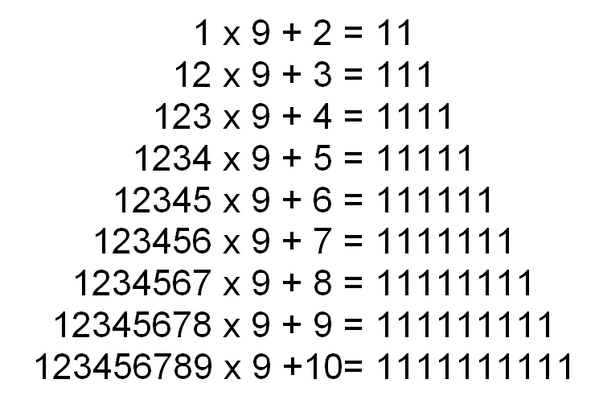
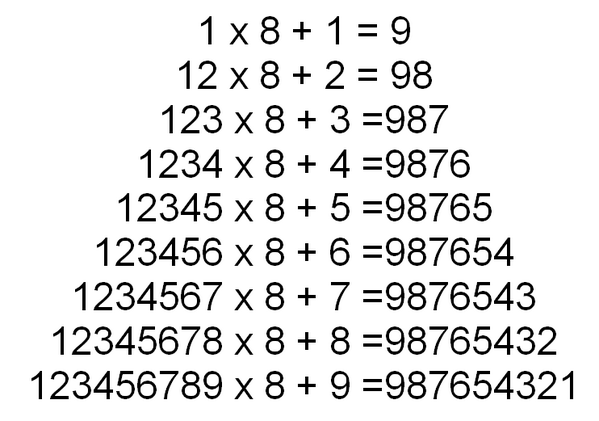
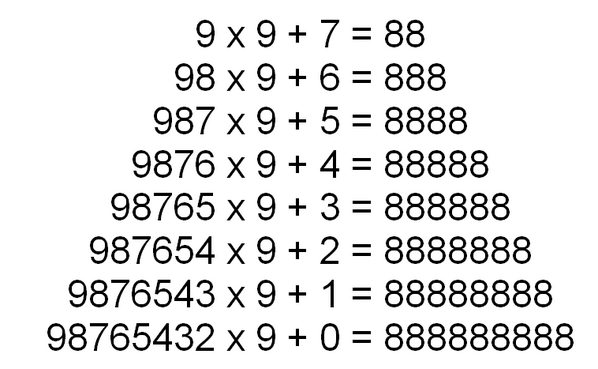
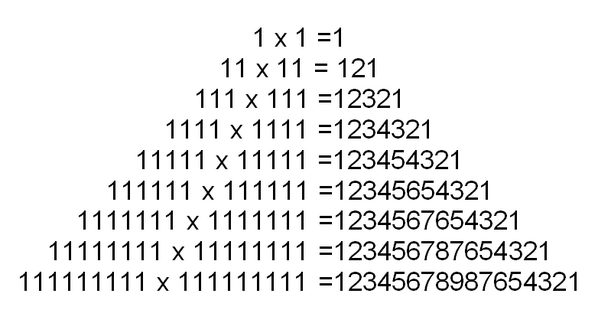
Here is a great series of images dealing with some familiar patterns. In each case they fall apart in the next case but I do love them anyway. Good for showing students some different types of patterns
Curriculum Tags: Gr7, Gr8
https://twitter.com/krish_innovates/status/523875805282455553/photo/1
https://twitter.com/krish_innovates/status/523875888182886402/photo/1
https://twitter.com/krish_innovates/status/523875954054430720/photo/1
https://twitter.com/krish_innovates/status/523876005900201985/photo/1


Friday, October 17, 2014

Math Links for Week Ending Oct. 17th, 2014

We have been adding to our Engaging Math blog and we have a few new ones this week. The first is a Tarsia puzzle for relating squares and square roots that we made. The premise is that you have a bunch of questions and matching answers. Students have cards that have either an answer or question on the edge. They then have to match up the edges that have the pairs of questions and answers and eventually it will make a shape. These are really good short activities that you can pull out at any time. We have several of these and there is a link for making your own on the Mr. Barton Maths site. 
Curriculum Tags: Gr7, Gr8
http://engaging-math.blogspot.ca/2014/10/tarsia-puzzle-squares-and-square-roots.html


Awesome post at Slam Dunk Math. In this one they use snap cubes to model factoring of expressions like y=x3+4x2+5x+2 by physically creating a rectangular prism from the cubes. It is also really great for students in courses like MHF4U to actually use some manipulatives to help solidify mathematical understanding. They need it to. The one issue with this activity that I see is that you need a huge pile of cubes. Despite that I could see doing this for any class where factoring a polynomial is needed (that's why even though this particular activity was done for MHF4U, I tagged the other courses as well). So I would actually do it in grade 10 with quadratics just to get that ball rolling. Seriously, check this activity out.
Curriculum Tags: MPM2P, MFM2D, MCR3U, MCF3M, MBF3C, MAP4C, MHF4U
http://slamdunkmath.blogspot.ca/2014/10/volume-length-width-height.html


I like matching activities and I also like doing those types of activities in courses that traditionally you wouldn't do that in. In MCR3U and MHF4U we have to prove trig identities and it is tough sometimes to shake that up a bit. So with that said I like this activity where students are given a sheet of cards and have to build the identities from them. The instructions are that they are just to start by finding cards that are one step from each other and eventually get to a full set of steps. Now I don't know if you could take this set and use them directly in either class (due to the constraints of the expectations) but you could easily make your own set. As seen here, it was just hand written so this would take very little time. Either way you can download this set here.
Curriculum Tags: MCR3U, MHF4U
http://mathteachermambo.blogspot.ca/2014/10/trig-identity-match-up-activity.html

This is a surprisingly fun activity that takes the mundane activity of multiplying integers and makes it into a game. All you need are decks of cards (red cards negative). Students are in groups of 3. Two students choose a card without looking at them and put them face out on their foreheads. The third person multiplies them together and gives the answer. The card holders (mind readers) now try to guess what the original cards are.
Curriculum Tags: Gr8, MPM1D, MFM1P
http://engaging-math.blogspot.ca/2014/10/integer-multiplication-mind-reader.html


I have always loved the Geometer's Sketchpad balance model sketches. They have tweaked them over the years and they have become really good. On their Dynamic Number website they have several, including this one that uses symbols and the balance method to determine unknowns (without the use of variables). You can try it out on this blog post without the sketchpad software and I strongly suggest that you do
Curriculum Tags: Gr8, MPM1D, MFM1P
http://blog.keycurriculum.com/a-balance-model-approach-to-algebraic-equations/

As I have been saying, Kyle at the Tap Into Teen Minds blog has been busy. I think he has found more hours in the day or something. Check out this 3Act Task based on the big nickel in Sudbury. What's the premiss? How many actual nickels would it take to make the big nickel? (and all the derivative questions). Good for proportional reasoning and volume of right prisms.
Curriculum Tags: Gr7, MPM1D, MFM1P, MPM2D, MFM2P, MBF3C, MCF3M
http://tapintoteenminds.com/3act-math/big-nickel/


Another 3Act task from Tap Into Teen Minds is about investigating the relationship between volume of a pyramid and right prisms of the same base (spoiler alert: one is a third of the other). This is an investigation all should do, especially if you have the plastic prisms for the demonstration (and especially since it is part of the grade 9 curriculum). But if you don't you can just show the videos Kyle has made (see the one of the 3rd acts below but look at them all on his blog post).
Curriculum Tags: MPM1D, MFM1P
http://tapintoteenminds.com/3act-math/prisms-pyramids-3-act-math-task/

Some great videos here from the Science Museum on Math. Including a few that are interviews with the writers of the Simpsons and Furturama. I like the one where they talk about Fermat's Last theorem but click on the link to see them all.
Curriculum Tags: All
https://www.youtube.com/watch?v=p0v4klUnFgM&list=PLwx8_TBZ6z_mJsVD9I1LdeTXjjD0MBHDA&index=5


And here is a longer form talk by Simon Singh about his book, Simpsons and their Mathematical Secrets.
Curriculum Tags: All
https://www.youtube.com/watch?v=bk_Kjpl2AaA


Because, why not?
Curriculum Tags: All
https://twitter.com/SciencePorn/status/521643516108505088/photo/1


I saw this cloud the other day on the way home and thought it was parabolic. I used Desmos to check it out (see link below) and it looks like it is close but not quite.
Curriculum Tags: MPM2D, MFM2P, MBF3C, MCR3U, MCF3M
https://www.desmos.com/calculator/5n3oh2dgtm


When you see #WCYDWT on the Twitter then you are seeing a Dan Meyerism that stands for What Can You Do With This? Its a picture or a video that might allow for some math. Here is one from Mathy Cathy. I think you could do some proportional reasoning or maybe some measurement and possibly some Pythagorean theorem using this image as a base.
Curriculum Tags: Gr7, Gr8, MPM1D, MFM1P
http://www.mathycathy.com/blog/2014/09/iphones-wcydwt/


I like visualizations of things and here is a nice visualization of the difference between 0.3 and 0.33
Curriculum Tags: Gr7, Gr8
http://mathfour.com/numeracy/difference-between-point-3-and-point-33-visually


Friday, October 10, 2014

Math Links for Week Ending October 10th, 2014

We are trying to add at least one new activity per week to our blog Engaging Math. This week we have added our Data Management Scavenger Hunt. In this activity students are given a set of data (with no titles) and asked to find their matching graph and title. It was actually developed for grade 8 but could be useful in any course with data management
Curriculum Tags: Gr7, Gr8, MBF3C, MAP4C, MDM4U
http://engaging-math.blogspot.ca/2014/10/data-management-scavenger-hunt.html

This is not a math resource exactly and I haven't tried it out but I am super intrigued. If you would like a set of clickers in your classroom but can't afford anything but some paper print outs (and you have a smart phone) then this might be the app for you. The app is called Plickers and I heard about it first here at I Speak Math. Apparently the way it works is you print out cards for your students and when you ask the questions they hold up their cards. You then scan the room with your phone camera and it reads the room and gives you the data. I will definitely be giving this a try next week.
Curriculum Tags: All
http://ispeakmath.org/2014/10/04/plickers-aka-can-we-do-this-all-period/

My son is in grade 10 and just finished working on this unit and I found myself asking the same question as Mary at the Making Math Meaningful blog. What is up with the circle? That is why go to all the trouble of developing the circle formula and not even worry about when the centre is not at (0,0). None the less I like this simple introduction to the circle that uses a review of the length of the line segment and Desmos.
Curriculum Tags: MPM2D
http://marybourassa.blogspot.ca/2014/09/equations-of-circles.html

I saw this commercial and wondered if they stole it from the math Twitterverse. The first time I saw this was on this video and then Dan Meyer made it into a 3Acts Task. And now it's in a Prudential commercial. Great stuff if you are teaching the idea of exponentials.
Curriculum Tags: MCR3U, MHF4U, MAP4C, MCT4C
https://www.youtube.com/watch?v=xZpjmBGIp44

I was reminded of this clip earlier this week. Sometimes in math all that is necessary is finding the right motivation. This clip from the TV show The Wire takes that to an extreme but the lesson still stands. If you contextualize math for students, they will be more likely to "get it". Note that there is some serious swearing in this clip so it is definitely NSFW.
Curriculum Tags: All
https://www.youtube.com/watch?v=sTsyFY9TESo

TED-ED had compiled all of their math related videos on one page. Try not to spend too much time on hear at once. I think my favourite might be the OK Cupid one. Thanks to @stevenstrogatz for this one.
Curriculum Tags: All
http://ed.ted.com/series/math-in-real-life


This is a classic and now available as an animated gif/jpg.
Curriculum Tags: Gr8, MPM1D, MFM1P
http://cdn.diply.com/img/ff321f2c-b405-45a2-a987-dd747736de37.jpg


Friday, October 3, 2014

Math Links for Week Ending Oct 3rd, 2014

We just posted a new activity to our Engaging Math site. This is another activity that will help you randomly sort students into groups. This time it is using some introductory concepts with integers. First students are each given a card, next they find the person who has the card with the representation of the same number. Finally they find another pair who's value, when added together with theirs has a sum of zero. Find more detailed instructions and the downloads at the link below.
Curriculum Tags: Gr7, Gr8
http://engaging-math.blogspot.ca/2014/10/sort-students-into-groups-using-integers.html


This is an interesting video. It asks the questions "Does math exist?" That is, is it just a construct of the human mind or does it actually exist outside in the world.
Curriculum Tags: All
http://blogs.kqed.org/mindshift/2013/06/does-math-exist-outside-the-human-brain/


I love when we can give fun systems of equations questions. And I like this one for a couple of reasons. The first is the presentation. By giving the visuals rather than just giving the information helps the students own the question a bit more. The other thing I like is that it doesn't ask the standard question: "How much does one chocolate one bag of chips cost?" Instead it goes right to another scenario. Of course the other good thing is the fact that this is on the 101qs site that encourages exploring the 3Act task by first letting us ask questions about short videos and images. You should become a member. Thanks to @dydan for this one.
Curriculum Tags: MFM2P, MPM2D
http://www.101qs.com/3166

Kyle at the Tap Into Teen Minds blog has been busy. Here are three of a bunch of new resources (more next week). First he has created a neat iBook on Pythagorean Theorem. It uses resources from the web (like a 3Act task) and interactive quizzes to teach through the idea of the Pythagorean Theorem. Obviously this will only work if you have an iPad or iPhone but it is free and its a nice interactive textbook.
Curriculum Tags: Gr8, MPM1D, MFM1P
http://tapintoteenminds.com/2014/09/20/free-pythagorean-theorem-ibook/

Another one from Tap into Teen Minds. This time a nice review of the generation of the volume of a right triangular prism.
Curriculum Tags: Gr7, Gr8, MPM1D, MFM1P
http://tapintoteenminds.com/2014/09/27/visualizing-the-volume-of-a-triangular-prism-formula/

And finally this week another visualization, this time of the area of a trapezoid. He has been really getting his Keynote on lately.
Curriculum Tags: Gr7
http://tapintoteenminds.com/2014/09/28/visualizing-the-area-of-a-trapezoid-formula/


So I was listening to More or Less and they had a segment on the English game show Countdown. Apparently, it recently set a Guinness record for the longest running TV game show (something like 30 years). Anyway one of the contests on the show is when they give the contestant 6 numbers and with them they have to use mathematical operations to create a random number under 1000. So if you haven't figured it out, this is a game show about order of operations!!!! How cool is that? These are not easy problems but I could see doing a similar type of thing in class as a fun activity. That being said below are a few videos to give you an idea of what goes on. The first one is neat because of how the guy gets the answer without having to actually multiply 318x75. Watch the video then listen to the More or Less podcast (starting at about the 11min mark) to hear the story behind the story.
Curriculum Tags: Gr7, Gr8, MFM1P, MPM1D
https://www.youtube.com/watch?v=pfa3MHLLSWI
https://www.youtube.com/watch?v=n8-mx3RSvOQ


Friday, September 26, 2014

Math Links for Week Ending Sept 26, 2014

Wow Ed Frenkel has been hitting it out of the park lately. Whether it was his book Love and Math, his Numberphile video Why People Hate Math, is LA Times OP Ed or his Science Friday interview and now with his Story Collider essay on math and bigotry and how love of math saved the day. Check it out below (and check out his other stuff too).
Curriculum Tags: All
http://storycollider.org/podcast/2014-09-19


Though I don't agree with the use of "controversial" in this article (I would use the word surprising instead), there are some nice summaries of some classic math problems. From infinity, to Benford's law, to the birthday problem, to Pi to the Monty Hall Problem, there is something for everyone here. Thanks to @mathletepearce for this one.
Curriculum Tags: Gr8, MCR3U, MDM4U, MHF4U
http://www.businessinsider.com/the-most-controversial-math-problems-2013-3?op=1

I have been known to say that we humans are bad at understanding probability. And it may also be true that maybe we don't take it seriously enough when we teach it. If you believe Arthur Benjamin then its way more important than calculus and I think I agree. Well NPR's All Things Considered have a special series called Risk and Reason about how we deal with probability in the news. For example, if the forecast calls for a 20% chance of rain, what does that mean? You can get them all at the link below.
Curriculum Tags: Gr7, Gr8, MBF3C, MDM4U
http://www.npr.org/series/333708682/risk-and-reason

The first video from Numberphile this week is on Friedman Numbers. These are numbers that can be made up by taking their digits and creating a math problem with them (eg 25 = 52). And as these numbers get bigger the expressions get more complex. Seems like a perfect opportunity to talk about order of operations.
Curriculum Tags: Gr7, Gr8, MPM1D, MFM1P
https://www.youtube.com/watch?v=I7v2wAXFQpc

The second is about a great geometry problem with 54 solutions. See one of them here that fits well with properties of angles. Its a very cool and elegant solution.
Curriculum Tags: Gr8, MPM1D, MFM1P
https://www.youtube.com/watch?v=m5evLoL0xwg


I can't miss an opportunity to point out a bad graph and neither did this blogger.
Curriculum Tags: MDM4U
http://www.vox.com/2014/7/23/5930695/ted-cruz-makes-the-worlds-worst-chart


Saturday, September 20, 2014

Math Links for Week Ending Sept. 19th, 2014

I was in a workshop this week and they showed this video from Marian Small. The video itself might cause a bit of controversy as she suggests that for most calculations beyond one digit by one digit kids should just use estimation and a calculator. I kind of reluctantly agree. Anyway, she tells it better so watch below. But the real reason I mention this is to point out a relatively new resource from the Ministry of Ontario called Learn Teach Lead. The Learn Teach Lead Vimeo page has literally thousands of videos that have been uploaded in the last 6 months.  This particular series was recently released and is called Leaders in Educational Thought: Mathematics K-12 and features speakers such as Damian Cooper, Jo Boaler, Dan Meyer, Cathy Fosnot, George Hart, Sugata Mitra and of course Marian Small. Given the group I suspect that all of these were recorded at OAME this year. They are part of a series Each speaker has a bunch of short video clips on things like assessment, mindset,  the art of mathematics and more. Go to the link below for all of them.
Curriculum Tags: All


This is a cool thing that you can do with fractions. Basically the post is about decimal expansions of fractions and their special cases ( eg repeated decimals). But the cool stuff showed up in the comment section. For example if you divide 1/99980001 you will get the counting digits in the following way 1.0002000300040005....x10-8. Check out the one that generates the Fibonacci sequence too. Note that to show these expansions you will definitely have to use Wolfram Alpha. 
Curriculum Tags: Gr7, Gr8
http://aperiodical.com/2013/11/from-the-mailbag-dual-inversal-numbers/#comment-611141
I like this post on sampling error. I think when we teach this topic it can often get glossed over but here are several resources (including a video lesson) to help get the idea across on types of sampling error.
Curriculum Tags: MDM4U
http://learnandteachstatistics.wordpress.com/

I don't think this article is saying anything really ground breaking: "Make math interesting for students by showing them the beauty and by making it relevant". It's not a new article either (last year) but it sources both Steven Strogatz and Dan Meyer and points out that just by making a question about Justin Bieber, that won't make it relevant to students. They can see through that.
Curriculum Tags: All
http://blogs.kqed.org/mindshift/2013/10/finding-the-beauty-in-math/

I was in a workshop this week and we were given four different shapes (3 rectangles and a triangle of different colours) and asked to completely cover a regular piece of paper (without overlapping) using the pieces to create a "flag". At first thought this might have seemed like a lame activity for kids but further discussion revealed many different ways this could be connected to the elementary curriculum (fractions, percents, area, spacial geometry and more). The activity was developed by Dr. Cathy Bruce and you can download the instructions and template for cutting the shapes out here and the student BLM here that includes questions that can be asked.
Curriculum Tags: Gr7, Gr8
https://twitter.com/davidpetro314/status/511939184098283520/photo/1

Friday, September 12, 2014

Math Links for Week Ending Sept 12, 2014

I think it is interesting to let students in on the history of mathematics. And as it turns out we have Marcus de Sautoy to help us out. Here is a nice article from the latest magazine for IB teachers (turn to page 11). He also has a four part documentary called the The Story of Maths which you can view here (the first episode is below). He also has a 10 part BBC radio series called A Brief History of Mathematics an can be listened to and downloaded here. And if you find by now that you are into de Sautoy then you might like his TED talk on symmetry. Thanks to Steve Chevalier for reminding me of these.
Curriculum Tags: All


Making the Internet rounds recently is Randall Munroe, creator of XKCD. He is hocking his new book which is an expansion of this blog What if?. Here you can read an interview with him on the 538 blog and he was also on Science Friday recently too. Listen here. He was apparently also on the Colbert Report as well (Canada at 15:00, US). And I had mentioned this before but he has a TED talk as well. Thanks to Mark Esping for the last two.
Curriculum Tags: All


I came up with this activity a few years ago to do with my data management kids. It's an open sort for types of single variable data. Even though I made it for grade 12 data management, it could easily be used for grade 11 college or even all the way down to grade 7 where they have to talk about different types of data (eg categorical vs numerical). Digital files are here to so it's ready to go as is.
Curriculum Tags: Gr7, Gr8, MBF3C, MDM4U
http://engaging-math.blogspot.ca/2014/09/sort-graphs-into-types-of-data.html


It's always great when teachers blog out there and do the heavy lifting for us. That being said, I like this activity, Transformation Telephone. If you may recall from childhood, the game telephone was played when one person whispered something into the ear of another, then they passed it on to someone else and so on until it comes back and you see how the thing has changed over all the retellings. That being said, at the Slightly Skewed blog they have developed this idea for transformations. The idea is that students are in groups of four and each are given a function to graph. They then pass their graphs to the right and the teacher gives them a transformation that they have to apply. The students graph the new function and then pass the graph again. Then a new transformation is given and graph and passed one more time to be transformed again. The reason I like this is that it is a self checking activity. That is, if the students have done it correctly, then after the last transformation the new graph will be the same as the original (I have done the first here in Desmos if you don't believe me). So the reason I say they have done the heavy lifting is that they have come up with several sets of transformations that all come back to the original function. The way it is set up, it could be used in grade 11 U or UC since they use function notation with parabolas but with a little tweak you might be able to adapt it for grade 10 as well (for example if all the transformations give were just described verbally (eg "translated to the right by 3"). Thanks to Dan Meyer for this one.
Curriculum Tags: MPM2D, MFM2P, MCR3U, MCF3M
http://slightlyskewedteacher.blogspot.ca/2014/08/transformation-telephone.html


It's always good to have real examples of things to explain concepts to students. In this story from the Story Collider (storys of science and math), a woman tells of how cognitive bias lead her boyfriend to jail. The story doesn't seem to be related to that at all as you are listening but it comes around at the end. Caution: there is one use of the f-word. Listen below
Curriculum Tags: MDM4U
http://storycollider.org/podcast/2014-08-22


I don't think anyone would argue that if you contextualize math for students, they will have a greater chance of internalizing those topics. The tough part is doing that authentically. Just making a question about a cell phone won't do it. None the less this article talks about doing just that to make algebra more accessible. 
Curriculum Tags: All
http://blogs.kqed.org/mindshift/2013/12/to-learn-algebra-the-not-so-secret-way-to-students-hearts/

This article is a year old but its message is still spot on. It deals with all of the stereotypes that go along with math. From the idea that it has to be hard, or to be considered good at math you have to be fast. Read on to determine if you are reinforcing any of these in your classes. Thanks also to Michele Cooper for reminding me of this video this week that, I think, goes along quite well with the article.
Curriculum Tags: All
http://www.theatlantic.com/education/archive/2013/11/the-stereotypes-that-distort-how-americans-teach-and-learn-math/281303/
https://www.youtube.com/watch?v=Xs9aGVUZ3YA