Showing posts with label vectors. Show all posts

Friday, December 6, 2013

Math Links for Week Ending Dec. 6, 2013

OK, so I am not going to say much about the features of Math Disk except to say watch the video below and try not to be impressed with all it does. Ok, so maybe I will mention some of the features. Algebraic and numerical calculations, function and statistical plots, probability, dynamic geometry and 3D vector plots (amazing stuff ripe for MCV4U) and even physics simulations (you can actually play angry birds). There is an iPad version as well. Though it doesn't have all the functionality, by creating an account on your computer, you can open and manipulate any files on the iPad. That being said, because it does so much, there will be a bit of a learning curve to figure out how to use it. There are a number of support articles and of course there are a pile of how to videos. My only complaint about these is that there doesn't seem to be any verbal instructions. They just show you how to do things. So when I was trying to make a dynamic plot, I found it hard to just watch what they were doing and mimic it on my screen without watching a few times. But once I got the gist of what to do the graphs and sketches started to flow. And its totally free. Go ahead, try to not be impressed by this. Thanks to Free Technology for Teachers for pointing this out.
Curriculum Tags: All
https://www.mathdisk.com/


The second of two graphing applets today is called Plotly. Now I know in Ontario we have both Fathom and Tinkerplots to use freely at home or school and many of us also have Excel and possibly Google Docs now but this package does just about every type of graph relatively easily. That is something that none of the above mentioned can do. Excel is pretty good at making line, bar and circle graphs (same with Google Docs) and Fathom and Tinker plots are great for graphing microdata (scatter plots, histograms, box plots and dot plots). But Plotly does them all. Histograms, box plots, bar graphs, line graphs and my new favourite: heat maps among others. I do find it interesting that circle plots are curiously omitted (probably a nod to those statistics folks who think they are among the most misused and awful types of graphs). All of the graphs have mouse over features and can be customized. As an added bonus it seems to work fine on an iPad (sans mouse over features) and you can even import your data from Dropbox or Google Drive. I suggest looking gallery to see the scope of what can be done and at the tutorials to master any of the idiosyncratic features of making these graphs. And of course, don't forget to create an account to save all of your graphs.
Curriculum Tags: MDM4U
https://plot.ly/
Depending on how anal you are about pseudo random generators (purists among you will no doubt harp that any electronic random generator is not, in fact, random - and you would probably be right), you may think this is cool or useless. Flip a day has one purpose. To flip a real coin once per day and post the result. That's it. As of today they are at 220 flips. You can follow them on Twitter and download the csv file as well.
Curriculum Tags: MDM4U
http://flipaday.co/
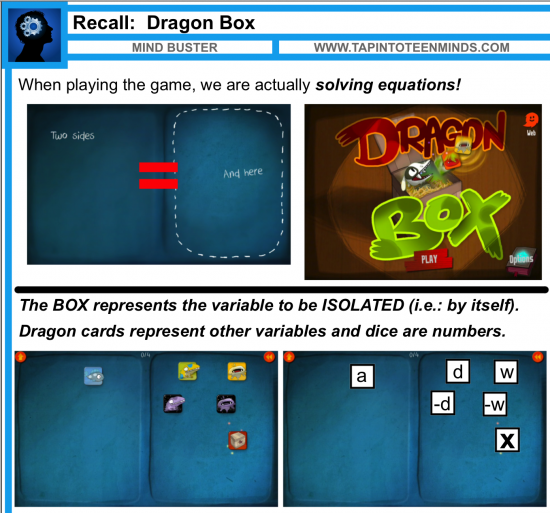
If you haven't used Dragon Box, I think you are missing out. I truly believe it is one of the best games out there that actually teaches a math concept. It runs on multi platforms and isn't that expensive. But how would you actually use it in a classroom to teach solving equations? Thanks to Tap into Teen Minds you are one step closer to figuring that out. Thanks Kyle
Curriculum Tags: Gr7, Gr8, MPM1D, MFM1P, MPM2D, MFM2P
http://tapintoteenminds.com/2013/11/24/how-to-effectively-use-dragonbox-in-your-solving-equations-lesson/


Do you need an example of something big to give some meaning to number sense calculations? Well how about info around the largest container ship ever built? Here are some stats over 1600ft long (longer than the Empire State Building is tall), 600 000 tonnes. It is basically a floating liquifying natural gas (FLNG) facility that mines, processes and can store up to 3.9 million tonnes of liquid natural gas each year. To get a sense of how much use out of that gas consider that the average family might use about 2000-3000 cubic metres of natural gas during the year (in gaseous form - click here to help convert that)
Curriculum Tags: Gr7, Gr8
http://www.wired.com/autopia/2013/12/worlds-largest-ship/


I love this "proof without words" of the area of the circle and how it can be connected to the area of a triangle. You probably could even get into some calculus talk in terms of infinitesimal slices of a circle to I guess
Curriculum Tags: Gr8, MPM1D, MFM1P
https://www.youtube.com/watch?v=whYqhpc6S6g

Friday, October 4, 2013

Math Links for Week Ending Oct. 4, 2013


If you love billionaires sailing around in multi million dollar carbon fibre rockets then the latest America's Cup challenge is for you. These AC 72 yachts are a technological marvel. Truly amazing how they literally fly above the water. But even better is that there is full coverage online with lots of extra features. In this segment they give a nice real world application of adding vectors when dealing with the apparent wind ( the direction the wind feels like it's coming from which is the vector sum of the actual wind and the wind generated from movement )
Curriculim Tags: MCV4U
http://www.youtube.com/watch?v=CvSRuer2V_k


Is post secondary education worth it? We have seen some of this data in previous weeks. In this version we have the connection with tuition and earnings. It interesting how the connection between these things is different depending on the type of institution. Now this is based on US schools where, in my opinion, there is a very wide swoth of quality ( whereas here in Canada I think the quality is pretty high regardless of where you go )
Curriculum Tags : MDM4U

Even though this blog post is about the social value of giving the same activity over several years, one of the comments ( from Mr. Stahl) actually inclded a link to the actual matching cards that you can download and print out here Even though this is a matching activity dealing with radians it could be adapted to grade 11 trig.
Curriculum Tags: MHF4U, MCR3U, MCF3M

Another one from the blog Math Teacher Mambo for trig. This time on reference triangles. I like two things about this 1) the investigative nature of the activity and 2) using whiteboard markers right on the surface of desks. No you can't lift up your desks to show the class like with portable white boards but the trade off is you have a huge surface for solutions. 
Curriculum Tags: MCR3U, MCF3M

Although there is some discussion here about the value of teaching domain and range (in the comments), here in Ontario it is a specific part of the grade 11 curriculum. So this yes/no card activity would work well.
Curriculum Tags: MCR3U, MCF3M

I am a sucker for a good infographic ( I'm kinda dumb that way). Here's one that Yummy Math is using that asks the question "is there a home field advantage in the NFL?" As it is with all activities on this site, the PDF is available to download but you need to be a member to get the answers and a editable version.
Curriculum Tags: Gr7, Gr8

For those of you who like Vi Hart, you can see tha the apple doesn't fall that far from the tree. Here is a video from her dad about his exhibit of geometrical art. On a side note, if you google his name he comes up as a professional geometer. Who knew that was a thing?
Curriculum Tags: All
http://www.youtube.com/watch?v=DI1612YhMqg


The art of data visualization (nuff said)
Curriculum Tags: MDM4U


I thought this graph would be a great discussion starter for two reasons. 1) because the discussion of which person is better could actually be fairly deep and 2) you can use it to re enforce the idea of how to place points on a scatter plot ( maybe you could ask where a good person would be place d on the graph? 
Curriculum Tags: MDM4U


Friday, September 20, 2013

Math Links for Week Ending Sept 20th, 2013

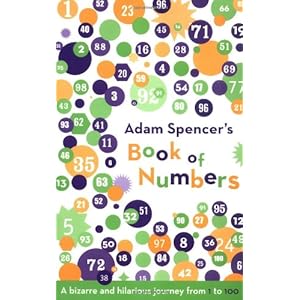
I really like Adam spencer. Maybe it's because he has a Phd in math but chooses to be a morning radio DJ. Or maybe because he is really good at taking complex ideas and making them understandable by most humans (usually in a humorous way). Here is his TED talk on prime numbers. Another great offering is his Book of Numbers where he looks at all the mathematical properties (and oddities) of the first 100 numbers.
I am a big fan of having part of an assessment being done with technology. Having taught math for several years in a computer lab I would regularly have part of the test done on the computer. I like how Amy Gruen mixed the use of cards and iPads running Desmos to do just that. Specifically here when it comes to transformations but you could see that this could be adapted to just about any topic. 
Curriculum Tags: MBF3C, MCF3M, MCR3U, MCT4C, MAP4C, MHF4U

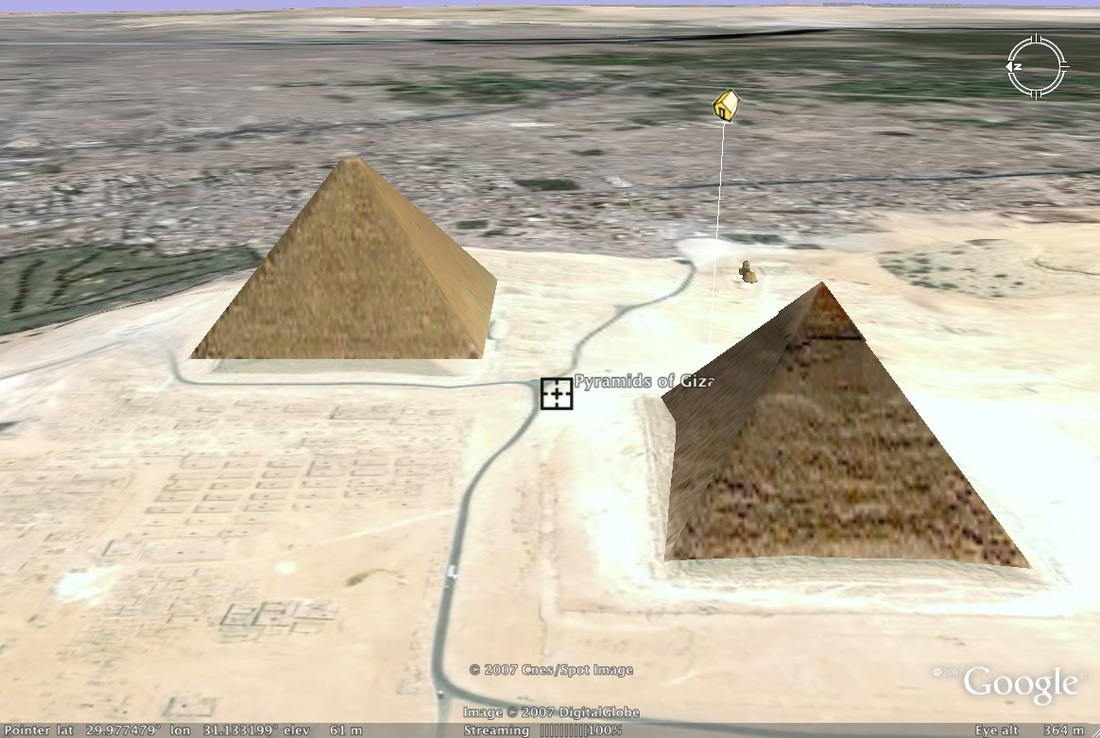
Real World math is a site that uses the power of Google Earth and Google Sketchup (both free apps) to bring math to the real world. With lessons that are as simple as estimation to as complex as intersection of planes in 3D (with volume, line graphs and more in between). One small caveat. As a teacher you have rights to the full lessons but you have to request a password first. So you fill out a small form and they email you one. Simple as that. Thanks to Paul Georges for this one
Curriculum Tags: All
http://www.realworldmath.org/

I love this series who's limit is e. Shown very nicely here on Desmos. I especially like the fact that in the table of values you can see the series being built.
Curriculum Tags: MCR3U, MHF4U
https://www.desmos.com/calculator/g0wfrqghzz


Having good questioning skills is not something you are born with. It is an acquired skill. Fear not. Here is a blog post that will give you 26 ways you can switch up your questions. 

You can always count on Yummy Math for quality resources. Here are a few of their more recent ones. As always the handout is free but to get the editable version and solutions you need to be a member.

This one is about the amount of caffeine in various brands if coffee. 
Curriculum Tags: Gr7, Gr8, MDM4U
http://www.yummymath.com/2013/how-much-caffeine/

This next one deals with a good topic for students. Does it pay to go to school. It may start out as if its a data management prompt (which it could be) but you can see how this can turn into something more when you deal with the wage values over the span of decades (and perhaps include interest calculations)
Curriculum Tags: Gr7, Gr8, MCF3M, MCR3U, MBF3C, MDM4U
http://www.yummymath.com/2013/does-it-pay-to-get-educated/

This last one combines slope and Pythagorean theorem when talking about slopes of mountain trails. Since it has slope, this could be used in grade 8 as an extension or be modified to focus mainly on Pythagorean Theorem.
Curriculum Tags: MPM1D, MFM1P, MFM2P,
http://www.yummymath.com/2013/steepness-and-fall-hiking/


I have some mixed feelings about this site but agree with it in principle. Nix the Trix is a site that tries to address the prevalence of using "tricks" to teach math concepts. Think "move the negative to the other side and change the sign". I know that I have been guilty of teaching these in the past but I think I am evolving. By teaching these tricks we gain time in the short term perhaps but students only make those gains in the short term as well. That is, if they don't have the conceptual reason a "trick" works then its just that, a trick, and not a mathematic concept. Just one more rule to memorize with no meaning. No wonder we have to re teach so much from year to year. That being said this site tries to address these ideas in the form of an evolving Google Doc. Take a look.
Curriculum Tags: All
http://nixthetricks.com/

I really love this first day activity. It uses the "What do you know/notice/wonder?" theme. First get them thinking about math in general, then your course, then at the end hit them with a few questions to show the skills they have. In the activity on this post he uses a picture of the ISS but on a similar activity he uses this picture of an underwater bridge. You can see the results of the activity here.
Curriculum Tags: All
http://mathteachermambo.blogspot.ca/2013/07/first-day-precalculus.html


Really quick one from Dan Meyer. Perfect as a Minds On when talking about transformations in grade 7 or 8. Of course there is no need to show students this video, just create your own and work the magic in your own classes.
Curriculum Tags: Gr7, Gr8
http://blog.mrmeyer.com/?p=16933

I like this as a way to introduce trig functions in MCR3U and MCF3M. Follow the link to see the full idea of the lessons. But watch the video to get a sense of how to introduce the concept.
Curriculum Tags: MCR3U, MCF3M
http://rationalexpressions.blogspot.ca/2013/09/the-first-three-days-of-trigonometry.html


Here is a great discussion starter about outliers
Curriculum Tags: MDM4U
http://untilnextstop.blogspot.ca/2013/09/heres-graph-that-makes-statement.html


Friday, August 23, 2013

Math Links for Week Ending Aug. 23, 2013

One of the things that Dan Meyer did this summer is called "Makeover Monday"
where he and his readers take various bits of textbook work and retool them. Here are the results:
Bedroom Area (Area, Rates) http://blog.mrmeyer.com/?p=17230
Checkerboard Boarder (Quadratics, Patterning) http://blog.mrmeyer.com/?p=17257
Bedroom Carpet (Composite Area, Rates) http://blog.mrmeyer.com/?p=17348
Internet Plans (Systems of Equations) http://blog.mrmeyer.com/?p=17391
Meatballs (Composite Volume) http://blog.mrmeyer.com/?p=17442
Tire Marks (Root Functions) http://blog.mrmeyer.com/?p=17499
Postage Rates (Piecewise Graphs) http://blog.mrmeyer.com/?p=17502
Ferris Wheel (Periodic Functions) http://blog.mrmeyer.com/?p=17501
Shipping Routes (Systems of Equations, Patterning) http://blog.mrmeyer.com/?p=17500
Boat Race (Vectors, Geometry) http://blog.mrmeyer.com/?p=17503
Penny Circle (Quadratics) http://blog.mrmeyer.com/?p=17153
Curriculum Tags: Gr7, Gr8, MPM1D, MFM1P, MPM2D, MFM2P, MCR3U, MCV4U


Here is a neat activity that links equilateral triangles and quadratics (or root functions)
Curriculum Tags: MCF3M, MCR3U


One dot, one person. That is, over 300 million dots representing each person in the US. All plotted out and colour coded by race. Neat visualization. Here is the link to the large zoomable map.
http://www.coopercenter.org/demographics/Racial-Dot-Map
Curriculum Tags: MDM4U


I must be fascinated by these things because I know I have pointed them out before. These pictures made of curves are neat. But unrelated to this is a new feature of Wolfram Alpha to "Analyze My Facebook Data". To do this you have to give Wolfram Access to your Facebook page but then it does its magic. Give it a try. 
Curriclum Tags: MDM4U, MCR3U

From Edudemic, a nod to McGraw Hill's Eglossary of math
http://www.freetech4teachers.com/2013/08/eglossary-math-glossary-for-middle-high.html
Curriculum Tags: All

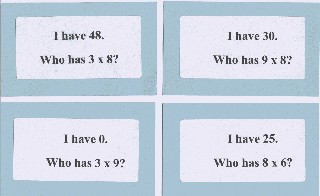
A whole pile of I Have, Who Has cards already premade for math.
http://www.mathwire.com/whohas/whohas.html
Curriculum Tags: Gr7, Gr8

Here is a really cool algebra puzzle that requires only generating and solving linear equations. Take a look here
http://letsplaymath.net/2013/08/22/puzzle-algebra-on-rectangles/
Curriculum Tags: MFM1P, MPM1D

In this video the boys from Top Gear (UK) take a look at how models scale down in size but actually scale up in durability
http://www.youtube.com/watch?v=ioYE_6Lx_hA
Curriculum Tags: Gr7, Gr8, MPM1D, MFM1P

The Big Bang Theory has no shortage of math references. Here's one that could be used as a Minds On for solving linear equations or speed
Curriculum Tags: Gr8, MPM1D, MFM1P
http://www.youtube.com/watch?v=9s9td5kvK5c

I still don't know what the 2nd guy says but this is still kinda funny "street math"
http://www.youtube.com/watch?v=stXG3np-BWE
Curriculum Tags: All


I love this one from XKCD dealing with the idea of small probabilities and statements that sound sensational but really aren't 
http://xkcd.com/1252/
Curriculum Tags: MDM4U


Friday, January 18, 2013

Math LInks for Week Ending Jan 18th, 2013

The Wild About Math blog tries to bring mathematics to the masses and has a series of interviews with people from the mathematics community. In this post, he has an over hour long interview with Steven Strogatz (Author of "The Joy of x" & "Calculus of Friendship" among other things). Its not a super professional interview but it is worth it to listen to for Strogatz. A few things that I heard that I liked were that the name Rational numbers has to do with the root word "ratio" and not in reference to being reasonable and that the dentist calls the gunk on your teeth "calculus" which comes from calcium. Another neat thing that resonated with me was the idea that in order to reach his readers, he does so with empathy for the way they feel about math.
http://wildaboutmath.com/2013/01/14/steven-strogatz-inspired-by-math-16/
Curriculum Tags: All

The Centre for Algebraic Thinking was developed to help fight problems with understanding algebra. The video, below, explains the impetus. Its a little boring at the beginning but it talks about what is on the site towards the end. In particular I like the Formative assessment questions and the Technology summary.
http://algebraicthinking.org/
Curriculum: All

 A Vi Hart video from last fall. This one is about vectors so it might be a nice addition to any discussion in Calculus & Vectors.
Curriculum Tags: MCV4U